There is a moment every baker knows too well. You are elbow-deep in bread dough, arms aching, forehead sweating, and you start wondering quietly, desperately, why you are doing this to yourself when technology solved this problem over a hundred years ago.
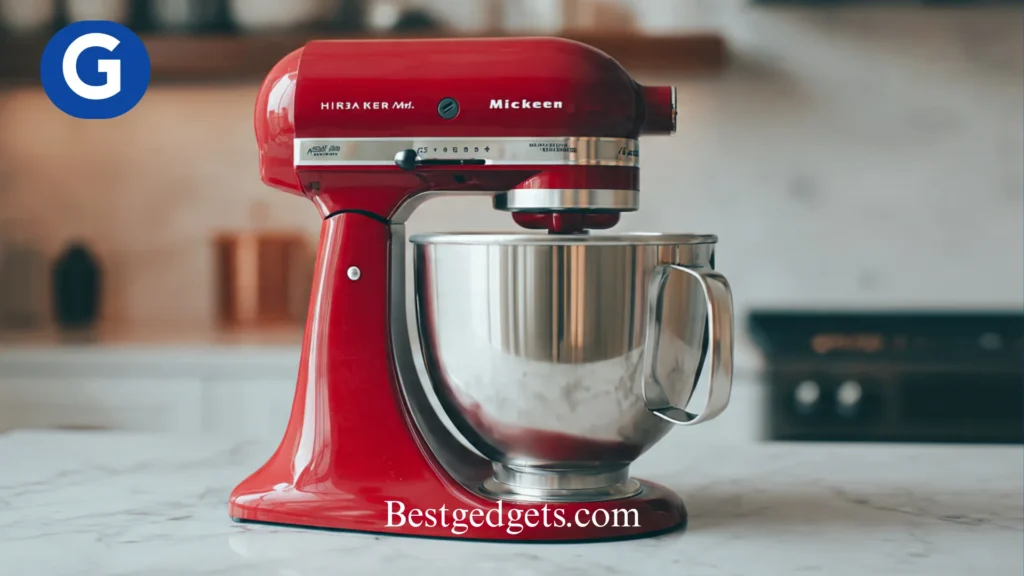
That is not an exaggeration. In 1908, engineer Herbert Johnson of the Hobart Manufacturing Company began designing a machine that would handle the task of mixing bread dough after watching a baker exhaust himself doing it by hand. His observation became an invention. That invention became the stand mixer. And the stand mixer became one of the most enduring kitchen appliances in history.
If you are thinking about buying one or upgrading the one you already have, this guide covers everything you need to know. No fluff, no filler, just real information about real machines.
Top picks
- KitchenAid Artisan Series 5-Quart Tilt-Head Stand Mixer
- KitchenAid Pro 600
- Cuisinart Precision Master (SM-50)
- Aucma 6.5-Quart Stand Mixer
- Ooni Halo Pro Spiral Mixer
- Bosch Universal Plus
What to look for before buying Stand Mixers
Motor Power
Motor wattage matters, but it is not the whole story. Cheaper models may have plastic parts that break, and the motors cannot handle anything but the most occasional use. If you are serious about dough cookie, bread, pasta — you want a motor that is at least 500W. That said, wattage alone does not determine performance. The KitchenAid Artisan runs a 325W motor and handles heavy doughs effectively because of how efficiently it channels that power.
Bowl Capacity
Bowl capacity is one of the most crucial decisions you will make when choosing a stand mixer. Standard capacities range from 3.5 to 8 quarts, with 5-quart bowls hitting the sweet spot for most home bakers. In testing, 5-quart models consistently handled everything from a single batch of cookie dough to a standard bread recipe with ease. However, if you regularly double recipes or bake for large groups, consider a 6-quart or larger model.
Speed Settings
A stand mixer must have a good range of mixing speeds, as specific speeds at different mixing stages are vital and can significantly impact the quality of your final result. Many stand mixers, especially those on the cheaper end, fail to provide that range. You want gentle speeds for folding and higher speeds for whipping cream or meringue — not just a vague “slow” and “fast.”
Tilt-Head vs Bowl-Lift
These are the two main design styles. Tilt-head models let you tilt the head back for easy bowl access, great for home cooks adding ingredients mid-mix. Bowl-lift models use a lever to raise and lower the bowl. They are more stable under heavy loads, which makes them better for large batches and stiff doughs.
Build Quality
All-metal construction is a strong positive signal for long-term reliability. Budget models with plastic components require gentler handling and may not hold up to daily heavy use. If you bake occasionally, a budget mixer is fine. If you bake every week, metal construction is worth the extra investment.
The Best Stand Mixers: Honest Reviews
1. KitchenAid Artisan Series 5-Quart Tilt-Head Stand Mixer — Best Overall

If stand mixers had a Hall of Fame, the KitchenAid Artisan would be a first-ballot inductee.
The KitchenAid 5-Quart Artisan Series Tilt-Head Stand Mixer delivered the best performance of the mixers tested by CNN Underscored, mixing, kneading, and whipping more effectively than the other mixers examined. The paddle easily creamed butter and sugar, then gently folded in chips and dried fruit.
Its 325-watt motor powers through tough mixtures effortlessly, ensuring consistent results every time. The tilt-head design allows for easy bowl access, enabling seamless addition of ingredients while mixing. The mixer includes 10-speed options, giving you precise control to knead, whip, or mix ingredients to perfection. With more than 20 available colors and a classic profile, you will also want to keep this mixer on display.
There is also an underappreciated quirk of the KitchenAid design: attachments from decades past remain compatible with current models, which is either excellent engineering or an appliance brand’s way of making you feel good about never throwing things away. Either way, it is genuinely useful.
Best for: Home bakers of all skill levels, gift buyers, and anyone who bakes regularly.
2. KitchenAid Pro 600 — Best for Heavy-Duty Baking

The KitchenAid Pro 600 is the powerhouse of the group. With a 575-watt motor and a bowl-lift design, it is built for bakers who mean business, especially those who tackle bread dough weekly.
This model can handle up to 8 loaves of bread or 13 dozen cookies in a single batch, according to KitchenAid’s specifications. The bowl-lift mechanism adds stability when working with stiff, heavy doughs. If your typical baking involves enriched brioche, whole wheat loaves, or large batches of pizza dough, this is the machine built for it.
Best for: Serious home bakers, frequent bread bakers, and larger households.
3. Cuisinart Precision Master (SM-50) — Best Mid-Range Option

Not everyone needs to spend at the premium KitchenAid price point, and the Cuisinart SM-50 proves that convincingly.
In testing by CNN Underscored, the Cuisinart SM-50 outperformed all of the cheaper mixers tested. It has a hefty 500-watt motor and a clean, streamlined design, making it an ideal choice for bakers who want strong performance without premium pricing. At 500 watts, it crosses the threshold that experts recommend for anyone serious about dough work.
Best for: Bakers who want solid performance without the highest price tag.
4. Aucma 6.5-Quart Stand Mixer — Best Budget Stand Mixer

The Aucma 6.5-Quart Stand Mixer, with its 660-watt motor, more powerful than the KitchenAid Artisan, has the muscle to whip cream, knead dough, and mix thick batters without straining. It is usually available under $150, making it a favorite for budget-conscious bakers.
The 6.5-quart bowl surpasses many premium mixers’ capacity, easily handling double batches. Six speed settings cover essential mixing techniques, and the complete accessory package eliminates additional purchases.
The honest trade-off: construction quality prioritizes affordability over decades-long durability, and plastic components require gentler handling than premium metal alternatives. This is a great starter mixer — not a forever machine for someone who bakes daily, but a reliable and capable option for everyone else.
Best for: Beginners, occasional bakers, budget-conscious households.
5. Ooni Halo Pro Spiral Mixer — Best for Bread Bakers

Released in 2025, the Ooni Halo Pro is one of the newest stand mixers on the market, bringing professional-grade spiral mixing technology to home bakers. It uses a dual-kneading spiral mixing system — a design typically found only in commercial bakeries — to produce bakery-quality dough at home. This mixer features a 7.3-quart bowl and 58 levels of precision speed control, allowing you to fine-tune the mixing process and achieve excellent gluten development.
The spiral dough hook, rotating bowl, and breaker bar work together to mix efficiently and evenly, while the breaker bar prevents dough from climbing up the hook. With a 650-watt motor and improved temperature management, the Ooni Halo Pro runs smoothly and consistently without overheating, a known issue with some mixers under sustained heavy load.
This is a specialist tool. If you bake bread regularly and want bakery-level results at home, the Halo Pro is genuinely exciting. If you mostly make cakes and frostings, the spiral design is not the right fit, it is optimized for dough, not batters.
Best for: Dedicated bread bakers, pizza enthusiasts, sourdough devotees.
6. Bosch Universal Plus — Best for Large-Batch Baking
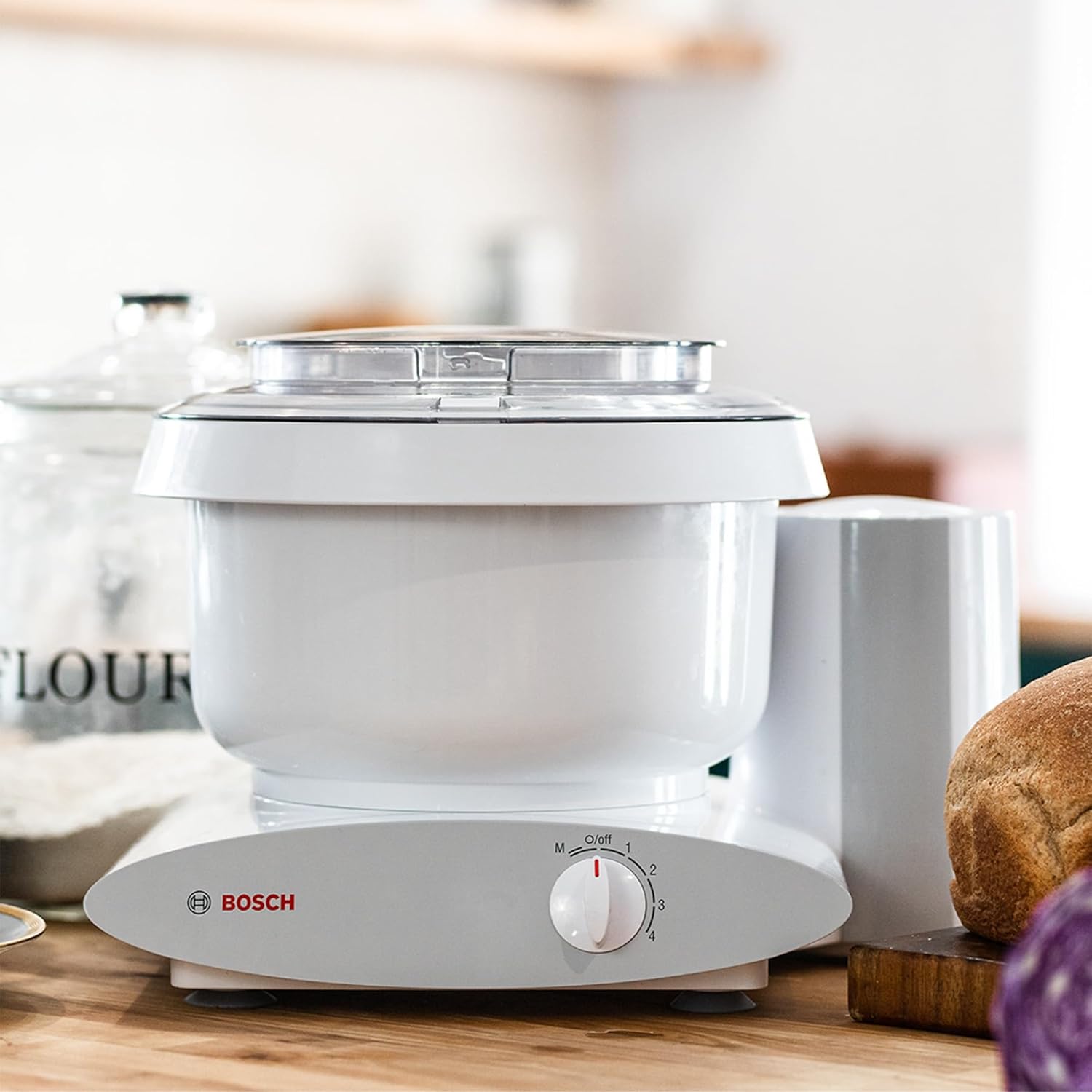
The Bosch Universal Plus is a beloved choice among bakers who need serious volume capacity. Its motor sits beneath the bowl rather than at the head, which gives it excellent stability under load. Home bakers who regularly make large batches of multiple loaves of bread, double or triple batches of cookies, often find that the Bosch handles them with less strain than comparably priced machines.
Bakers who want a quiet, durable, and long-lasting mixer with a strong motor and no overheating issues, and anyone who values easy cleanup, tend to make the Bosch their long-term choice.
Best for: High-volume home bakers, families who bake in large quantities.
Tilt-Head vs Bowl-Lift: Which Design Is Right for You?
This is one of the most common questions buyers ask, and the answer depends entirely on what you bake.
Tilt-head mixers are more user-friendly for everyday use. You can easily access the bowl, scrape down the sides, and add ingredients mid-mix. The KitchenAid Artisan is the best-known example. For most home bakers, this design covers everything comfortably.
Bowl-lift mixers are more stable under heavy loads. When you are working with a full bowl of stiff dough, the bowl-lift mechanism keeps everything locked and aligned. The trade-off is that accessing the bowl takes slightly more effort. The KitchenAid Pro 600 and the Bosch Universal Plus both use this style.
If your baking is varied cakes, cookies, bread, and meringue, a tilt-head is the more versatile day-to-day choice. If bread and heavy doughs dominate your routine, a bowl-lift is worth considering.
Why a Stand Mixer Is Worth the Investment
Before getting into specific models, it helps to understand what you are actually buying.
Stand mixers are not just a baker’s tool. With the right attachments, they are fantastic for making homemade pasta, mashing potatoes, and even grinding meat. Chef Zac Young, a longtime judge on Food Network, put it well when he said stand mixers are “the ultimate tool for multitasking” and also, entertainingly, “jewelry for your kitchen.”
That last part sounds frivolous, but it is actually practical. A stand mixer that lives on your counter gets used. One stuffed in a cabinet collects dust. Good design encourages good habits.
For avid bakers and home chefs, a stand mixer can exponentially increase the capabilities and efficiency of the kitchen. From homemade pizza dough to pasta, cookies, frosting, and ice cream, stand mixers handle the kind of work that leaves your arms sore for two days if you do it by hand.
The financial logic holds up, too. According to CNBC, a quality KitchenAid mixer can outlive you, with the device having an average lifespan often measured in decades. When you spread that cost over years of use, even a premium mixer starts to look like a bargain, which is a sentence that sounds like appliance-industry propaganda but is genuinely true.
How Stand Mixers Actually Work
Understanding the mechanics behind a stand mixer helps you make a smarter purchase.
Most stand mixers use what is called planetary mixing action. KitchenAid mixers employ a “planetary” action to do their mixing. As a beater spins, it also rotates around within the bowl, which ensures more contact with the ingredients. The end result is that ingredients get more fully mixed than they would using alternative mechanisms.
Think of it like the Earth spinning on its own axis while orbiting the Sun, except the result is better cookie dough rather than the seasons.
The simultaneous but reversed spinning motions allow the device to not only stir your batter in circles the way you could do with your hands, but also to fold and aerate the mixture as it goes. The result is a faster, more efficient, and more effective mixing motion.
Some newer models, like the Ooni Halo Pro, use a spiral mixing system instead a design typically found in commercial bakeries. Both approaches work well, but they serve slightly different purposes, which we will cover below.
Stand Mixer Attachments: Where the Real Value Hides
One underrated aspect of a good stand mixer is the attachment ecosystem that comes with it or that you can add over time.
Most mixers include three core attachments: a flat beater (for cake batter and cookies), a dough hook (for bread and pizza dough), and a wire whisk (for cream and egg whites). These cover the majority of baking tasks most home cooks encounter.
Going further, a wide range of additional attachments allows you to grind meat, roll pasta, spiralize vegetables, and even make ice cream. KitchenAid’s attachment hub, which has remained compatible across model generations, opens up a remarkably wide range of tasks.
One practical storage tip from food blogger Bianca Fernandez: stand mixers are heavy and best stored on a stable, accessible surface rather than a high shelf. Reaching for a heavy appliance on a step ladder is a genuine safety risk, not just an inconvenience.
Common Mistakes to Avoid When Buying a Stand Mixer
Buying too small. A 3.5-quart bowl sounds fine until you try to make a full batch of cookie dough and the dough starts climbing the sides. For most households, a 5-quart bowl is the sensible starting point.
Ignoring build quality for price. A cheap mixer that breaks after two years is not a bargain. All-metal construction is a reliable indicator of long-term durability.
Buying for tasks you will not do. A professional-grade spiral mixer is extraordinary for bread — but if you mostly make birthday cakes and frosting, you are paying for a feature you will rarely use.
Overlooking the attachment ecosystem. If you plan to expand what you do with your mixer over time, check which attachments are available for the model you are considering before you buy. A cheaper model that locks you into limited attachments can end up being more restrictive than you expect.
Quick Comparison: Best Stand Mixers at a Glance
| Mixer | Bowl Size | Motor | Best For |
|---|---|---|---|
| KitchenAid Artisan | 5 quart | 325W | Best overall, everyday baking |
| KitchenAid Pro 600 | 6 quart | 575W | Heavy-duty, large batches |
| Cuisinart SM-50 | 5.5 quart | 500W | Mid-range value |
| Aucma 6.5-Qt | 6.5 quart | 660W | Budget-friendly option |
| Ooni Halo Pro | 7.3 quart | 650W | Dedicated bread bakers |
| Bosch Universal Plus | 6.5 quart | 800W | High-volume home baking |
Final Thoughts
A stand mixer is one of the few kitchen appliances that genuinely changes how you cook and bake. It saves time, reduces effort, and opens up recipes that would be impractical to attempt by hand. It also has a hundred-year track record of reliability which, in the world of kitchen gadgets, is an almost unheard-of thing.
For most home bakers, the KitchenAid Artisan remains the benchmark. Its combination of performance, versatility, longevity, and design is hard to beat at its price point. If budget is the primary concern, the Aucma 6.5-Quart offers surprising value. If bread is your passion, the Ooni Halo Pro brings professional spiral-mixing technology into a home kitchen for the first time.
Whatever you choose, you are making a decision you are unlikely to regret. A good stand mixer, treated well, will outlast a lot of the other gadgets in your kitchen and probably keep making excellent bread long after those gadgets are forgotten.