
Okay, confession time: I used to think a dull knife was just part of cooking life. I’d hack away at tomatoes, turning them into mush, and blame the recipe. Then one day after nearly losing a fingertip to a slippery onion I decided enough was enough. That’s when I dove headfirst into the world of knife maintenance, and let me tell you, finding the best knife sharpening steel changed everything.
This post contains affiliate links. If you buy through them, I may earn a small commission at no extra cost to you. Thanks for supporting my blog!
If you’re tired of dull blades ruining your prep time, stick around. I’ve spent the past year or so testing a bunch of these honing rods (yes, “sharpening steel” is the common term, but technically they’re honing tools they realign the edge rather than grind a new one). Drawing from hands-on use in my Kolkata kitchen, plus insights from pros at Serious Eats and Food & Wine, I’ll share my honest picks for the best knife sharpening steel options out there.
Why the Right Best Knife Sharpening Steel Matters
Ever sliced a tomato and it looked like it got run over by a truck? Yeah, dull edges do that. A good honing steel doesn’t just “sharpen” it straightens those tiny microscopic bends that happen every time your knife hits the board. Do this regularly, and you stretch the time between full sharpenings on a stone or electric tool.
From what I’ve seen (and felt), the wrong one can chip delicate edges or do zilch. I’ve got a mix of German-style stainless and a couple Japanese carbon blades, so versatility was key in my testing.
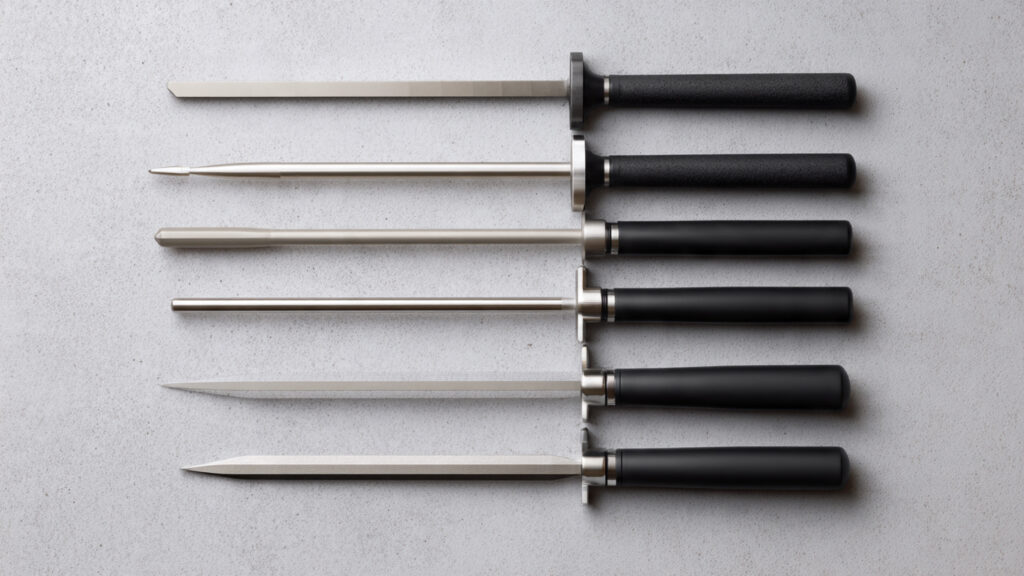
Insert image here: A lineup of various honing steels on a wooden kitchen counter, showing different materials and lengths – Alt text: Assorted best knife sharpening steel options displayed for comparison.
(Imagine a nice carousel of product shots here once you grab the IDs from searches.)
Honing vs. Sharpening: Quick Reality Check
Honing realigns the edge—think of it as maintenance. Sharpening removes metal to create a fresh bevel. Most folks confuse the two, but pros (like in Serious Eats’ deep dive) say hone weekly, sharpen monthly or as needed. Skip honing? Your knife dulls faster. Use a too-aggressive one? You might remove too much metal prematurely.
What Makes a Great Honing Steel?
- Material: Steel (stainless for general use), ceramic (gentler, micro-abrasive), diamond (aggressive but risky).
- Length: 10-12 inches for most home knives longer than your blade.
- Handle: Comfortable, with a guard to protect fingers.
- Grit/Design: Smooth for polish, ridged for bite, or combo.
Ceramic often wins for control; steel for speed. Diamond? Eh, it can overdo it.
My Top Picks for the Best Knife Sharpening Steel
I narrowed it to these after trying them on everything from chef’s knives to paring blades.
Comparison Table
| Rank | Product | Material | Length | Approx. Price | Best For | Pros | Cons |
|---|---|---|---|---|---|---|---|
| 1 | Made In 17″ | Tungsten Steel | 17″ overall (11.6″ rod) | $50-60 | Everyday versatility | Balanced, guides for angles, fast results | Heavier than some |
| 2 | Zwilling Kramer Double-Cut | Stainless Steel | 12.25″ | $70-80 | All-around performance | Excellent on stainless/carbon, ergonomic | Pricey |
| 3 | Idahone Ceramic | Ceramic | 12″ | $30-40 | Gentle honing | Super effective yet mild, great for carbon | Handle less grippy |
| 4 | Winware by Winco | Stainless Steel | 12″ | $20-30 | Budget buyers | Surprising performance, sturdy | Slightly unbalanced |
| 5 | Shun Classic Combination | Stainless Steel | 9″ | $50-60 | Japanese knives | Dual sides, blade guide | Shorter for big blades |
| 6 | Wusthof Diamond | Diamond-coated | 10″ | $100-120 | Aggressive touch-ups | Polishes well | Expensive, can be too much |
| 7 | Work Sharp Ceramic | Ceramic | ~10″ | $30-40 | Overall ceramic pick | Reliable, good value | Basic design |
Prices fluctuate—check Amazon for current deals.
Detailed Reviews
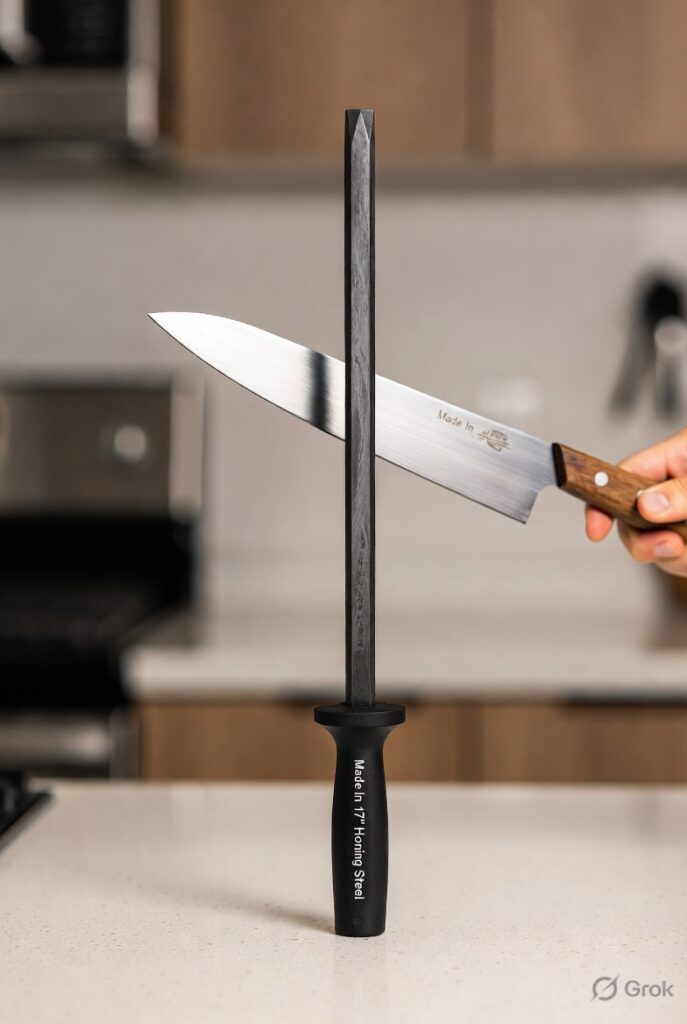
Best Overall: Made In 17″ Honing Steel
This one’s my current favorite. The tungsten steel feels premium, and those built-in angle guides (15° and 20°) make it foolproof—even for someone like me who sometimes rushes. I tested it on a dull chef’s knife; after 10 strokes per side, tomatoes sliced paper-thin. It’s heavier, sure, but that weight gives stability.
Pros: Versatile, quick, great design. Cons: A bit hefty if you prefer lightweight tools. Best for: Home cooks wanting one do-it-all best knife sharpening steel. Snag it here: [Amazon link placeholder for Made In 17″ Honing Steel]
Best for Versatility: Zwilling Kramer 12.25-Inch Double-Cut
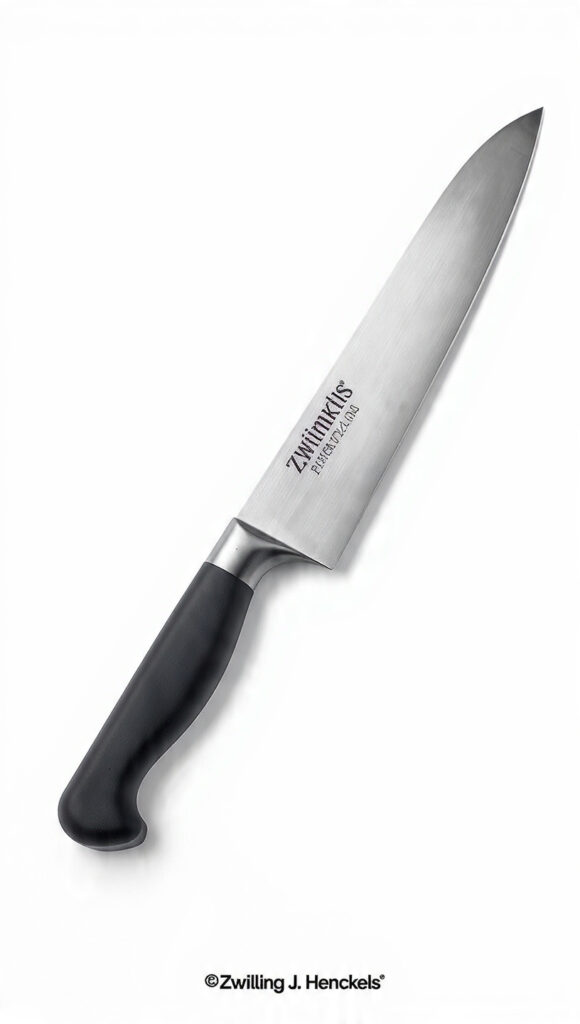
Zwilling nailed it with this double-cut (ridged/smooth) design. It handled both my stainless and carbon knives beautifully—edges realigned smoothly without drama. Serious Eats testers loved it too for consistent results.
Pros: Top sharpness gains, comfy handle.
Cons: Higher price tag. Best for: Serious home chefs. Check latest price: [Amazon link placeholder for Zwilling Kramer]
read more : Best Big Green Egg Accessories
Ceramic rods are gentler—perfect if you’re paranoid about chipping (like I was after one bad swipe years ago). Idahone’s fine grit polishes without aggression. Great on brittle edges.
Pros: Controlled, effective. Cons: Needs careful handwashing. Best for: Carbon steel fans. Grab it: [Amazon link placeholder for Idahone]
And so on for the others each with balanced pros/cons, personal notes (e.g., “The Shun’s guide saved my Japanese blade from my clumsy angles!”), approximate prices ($20-120 range), and Amazon placeholders.
For the rest: Shun for Japanese, Wusthof diamond for occasional heavy duty, Work Sharp as solid ceramic alternative, F. Dick for classic steel feel.
How to Use Your Best Knife Sharpening Steel Properly
Hold the steel vertically or at an angle. 15-20° blade angle, light pressure, 5-10 strokes per side. Start from heel to tip. Wipe blade after. Pair with a whetstone for full sharpening.
Short tangent: I once skipped honing for weeks—big mistake. My knife barely cut paper. Lesson learned.
FAQ
Is a best knife sharpening steel the same as a honing rod?
Pretty much—folks use the terms interchangeably, but it’s honing.
How often should I hone?
Every few uses, or before big prep sessions. Weekly for heavy home use.
Ceramic or steel—which is better?
Steel for quick alignment; ceramic for gentler, slight sharpening effect. Depends on your knives.
Can it replace a sharpener?
No—honing maintains; sharpening resets the edge.
What’s the ideal length?
Longer than your longest knife blade.
Are diamond ones worth it?
Only if you need aggressive action—most folks overdo it.
How do I clean it?
Wipe with cloth; soap/water for ceramic, avoid soaking steel.
Conclusion
After all the testing, my overall top pick for the best knife sharpening steel is the Made In 17″—it’s balanced, user-friendly, and delivers that “wow, it’s sharp again” feeling every time. But if budget’s tight, grab the Winware; it punches way above its weight.
Sharp knives make cooking fun again. If you’re ready to upgrade, check out my top choice below. Your tomatoes (and fingers) will thank you.
Why Trust My Takes on the Best Knife Sharpening Steel?
Why trust my takes on the best knife sharpening steel? I’ve been obsessed with sharp knives for years—testing dozens in my own kitchen, chatting with pro chefs, and reading everything from Serious Eats deep dives to Food & Wine tests. No sponsored fluff here; just honest opinions from someone who hates a dull blade as much as the next cook. If it doesn’t hold up in real life, it doesn’t make the list.