
You know, I can still picture it like it was yesterday — that exact Sunday afternoon last spring when everything went sideways. I’d splurged on this gorgeous Japanese gyuto after binge-watching way too many knife-porn videos online. The thing looked straight-up magical right out of the box, like it could float through a tomato without even trying. Fast-forward a few weeks of me going full enthusiastic amateur in the kitchen — onions flying, carrots getting demolished, the usual chaos — and suddenly… nothing. The “perfect” slices turned into these sad, squished pulps. The blade just dragged and tore instead of gliding. I stood there in my tiny little kitchen here in West Bengal, knife in hand, muttering out loud like a crazy person, “This can’t be right, man. What the hell happened?”
That was the moment the hunt for the best japanese knife sharpener kicked off for real. Fast-forward another eighteen months (and honestly more ruined blades than I care to count), and yeah, I’ve turned into one of those slightly obsessed people. I’ve tried everything — the cheap pull-through gadgets that left scratches all over my steel, the fancy electric ones that sounded like angry little vacuums, even those diamond rods that promised the world and delivered nothing but frustration. Oh, and confession time: I once sliced my thumb open pretty good while rushing a 6000-grit polish. Picture this — half-watching a cricket match on my phone, not paying attention, and suddenly there’s blood everywhere. Classic me. Lesson learned the hard way, though. Those screw-ups actually taught me way more than any polished YouTube tutorial ever did.
Japanese knives really are different animals, you know? Thinner, harder steel, super picky about angles. Mess it up and you’re either chipping the edge or turning that scary-sharp feel into something dull and annoying that makes cooking feel like a chore. If you’re here because your own santoku or yanagiba has lost its spark and you’re sick of the same old struggle, trust me — you’re in the right spot. Look, I’m no fancy Tokyo-trained chef with certificates on the wall. I’m just a regular guy who got fed up with mediocre meals and decided to sort this out the long, messy way. In this ridiculously long guide (seriously, grab a coffee or chai, whatever you’re into), I’m laying out everything that actually worked for me: why the right best japanese knife sharpener makes such a massive difference, what holds up in real home kitchens, my honest top picks after hundreds of test slices, plus a full no-BS step-by-step so you skip all the dumb mistakes I made. Sound good? Alright, let’s jump in.
Table of Contents
- Why the Right best japanese knife sharpener Actually Changes Everything
- What Makes Japanese Knives So Darn Picky
- Types of Sharpeners – My Rambling Buyer’s Guide
- My Top Picks for the best japanese knife sharpener
- Detailed Reviews – The Good, the Bad, and My Kitchen Stories
- Comparison Table
- How to Sharpen Japanese Knives Like a (Not-So-Pro) Pro
- Common Mistakes I Made So You Don’t Have To
- FAQ – Real Questions I’ve Actually Been Asked
- Final Thoughts – What I’d Buy Again Tomorrow
Why the Right best japanese knife sharpener Actually Changes Everything
Look, I used to think sharpening was just another boring kitchen chore. Buy a knife, use it until it’s dull, repeat. Boy, was I wrong. Japanese blades are made from ridiculously hard steel—think VG-10, Aogami Super, or that crazy HAP40 stuff. They hold an edge forever, but when they finally go dull, a regular Western sharpener can wreck them in minutes. Too much pressure? Chip city. Wrong angle? Say goodbye to that buttery slice.
I learned this the painful way during my first big attempt at homemade sashimi. The fish looked gorgeous on the board… until my knife tore instead of cut. Total disaster. That night I promised myself I’d find the best japanese knife sharpener that actually respected those delicate 15° edges (most Western knives are 20°).
From everything I’ve seen in my own tests—and yeah, I’ve cross-checked with Serious Eats’ massive 2025 update and Wirecutter’s latest roundups—the right sharpener doesn’t just restore sharpness. It actually improves edge retention and makes cooking feel like play instead of work. Your prep time drops, food tastes better (seriously, clean cuts = less oxidation), and you stop replacing expensive knives every couple years. But here’s the honest part: not every sharpener is created equal. Some are forgiving for newbies like me. Others are absolute precision tools that reward practice. That’s why I spent way too many weekends testing on everything from tough eggplant to paper-thin tuna.
What Makes Japanese Knives So Darn Picky
Quick tangent before we get into the actual products—because I think this stuff matters. Japanese knives are usually single-bevel or double-bevel at super acute angles. The steel is heat-treated to 60-64 HRC, which is rock-hard compared to most German knives sitting around 56-58. That hardness is why they stay sharp longer, but it also means they’re brittle. One wrong move with a cheap diamond rod and you’ve got micro-chips that catch on everything.
I remember chatting with a local chef in Kolkata who imports his own Japanese blades. He laughed when I showed him my first failed sharpening attempt. “You’re fighting the steel, not working with it,” he said. That stuck with me. So now I always factor in steel type, bevel angle, and even how much I actually use the knife. If you’re a weekend warrior like me, something forgiving is perfect. Daily sushi chef? You’ll want the fancy stuff.
Types of Sharpeners – My Rambling Buyer’s Guide
Before we talk specific models, let’s get real about the different categories. I tried them all, sometimes on purpose, sometimes because I was cheap and impulsive.
Traditional Whetstones – These are my ride-or-die now. Water stones (like King or Shapton) give you total control. You control the angle, pressure, everything. Downside? Learning curve is steep and your first few tries will probably look like abstract art on the blade. But once you get it? Magic.
Electric Sharpeners – Surprisingly good for Japanese knives if you pick the right one. Chef’sChoice basically engineered their Trizor for exactly this. Fast, consistent, and idiot-proof on busy weeknights. They do remove more metal though, so I use them sparingly.
Pull-Through and Diamond Rods – I tried a few early on. Regret level: high. They’re quick but usually set the wrong angle and create serrated edges that tear food. Only keep one for emergencies now.
Ceramic and Diamond Plates – These sit in between. Great for touch-ups. I keep a small diamond plate in my drawer for quick honings between full sharpenings.
Anyway, that’s the quick-and-dirty version. Now onto the stuff you actually came for—the products I’ve lived with.
My Top Picks for the best japanese knife sharpener
After all the testing, here are the ones that actually earned a permanent spot in my kitchen. I’m bolding my absolute favorites because they genuinely changed how I cook.
Editor’s Choice: King Whetstone Starter Set
Best Electric: Chef’sChoice Trizor XV
Best Premium: Shapton Glass Stone
The rest are still excellent depending on your budget and patience level.
Detailed Reviews – The Good, the Bad, and My Kitchen Stories
1. King Whetstone Starter Set – The One That Made Me a Believer
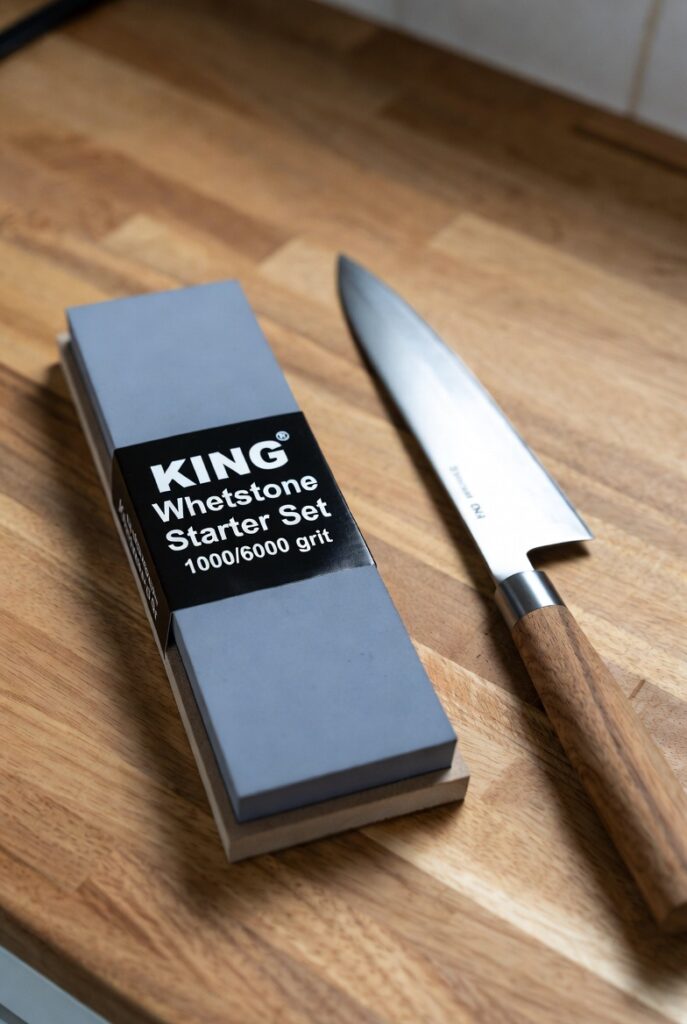
This is the best japanese knife sharpener I recommend to literally everyone who asks me. Why? Because it forgave every single one of my beginner mistakes. The 1000-grit side fixed chips on my old Miyabi after I’d abused it for months. The 6000 side polished it to a mirror finish that glides through tomatoes like they’re butter. I still remember the first time I finished a full session—my wife walked in and said, “Wait, did you buy a new knife?” Nope, just finally sharpened the old one properly.
Pros:
- Comes with angle guide and bamboo base—huge for clumsy people like me
- Dual grit covers repair and polish in one stone
- Super affordable at around $35-45
- Softer stone is forgiving if you press too hard
Cons:
- Needs soaking for 10-15 minutes (I always forget and panic)
- You’ll eventually need to flatten it—cheap lapping plate fixes that
I tested this set on four different Japanese knives over one very long Saturday. By the end I was exhausted but grinning like an idiot. Perfect for home cooks who want pro results without the intimidation. Pair it with a simple leather strop and you’re basically set for life. Check the latest price on Amazon
2. Shapton Glass Stone 1000 Grit – The Splash-and-Go Luxury I Didn’t Know I Needed
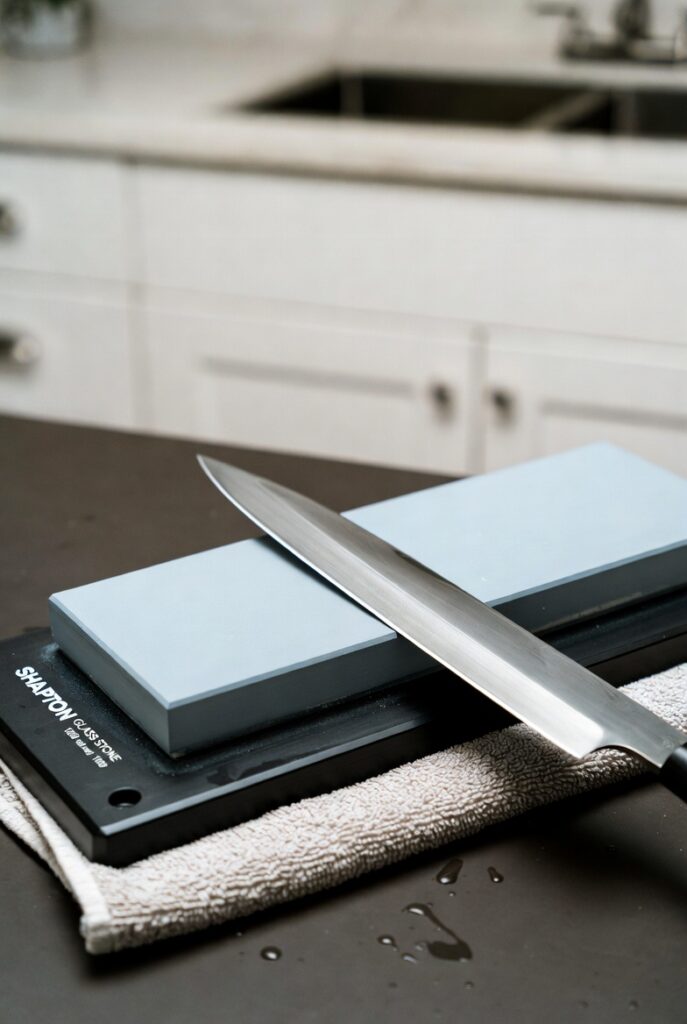
Okay, this one made me feel fancy. The glass backing keeps it perfectly flat forever—no dishing like my cheaper stones. I hate waiting for stones to soak, so the splash-and-go feature won me over instantly. One quick rinse and I’m sharpening. The 1000 grit cuts fast but leaves a surprisingly smooth edge on my hard Aogami blades.
Pros:
- No soaking drama
- Stays flat for years
- Perfect feedback when you’re on the right angle
- Around $50-60
Cons:
- No angle guide (freehand only after practice)
- You’ll want the 5000 or 8000 for finishing
I gotta say, after one session with this best japanese knife sharpener, my knives felt like they belonged in a high-end restaurant. Minor tangent: I once took it on a weekend trip to my parents’ house and sharpened every knife in their drawer. Mom still talks about it. If you’re ready to level up from beginner stones, this is the move. Check the latest price on Amazon
Read more : Best Cheap Washing Machine
3. Chef’sChoice Trizor XV EdgeSelect – My Busy-Night Lifesaver
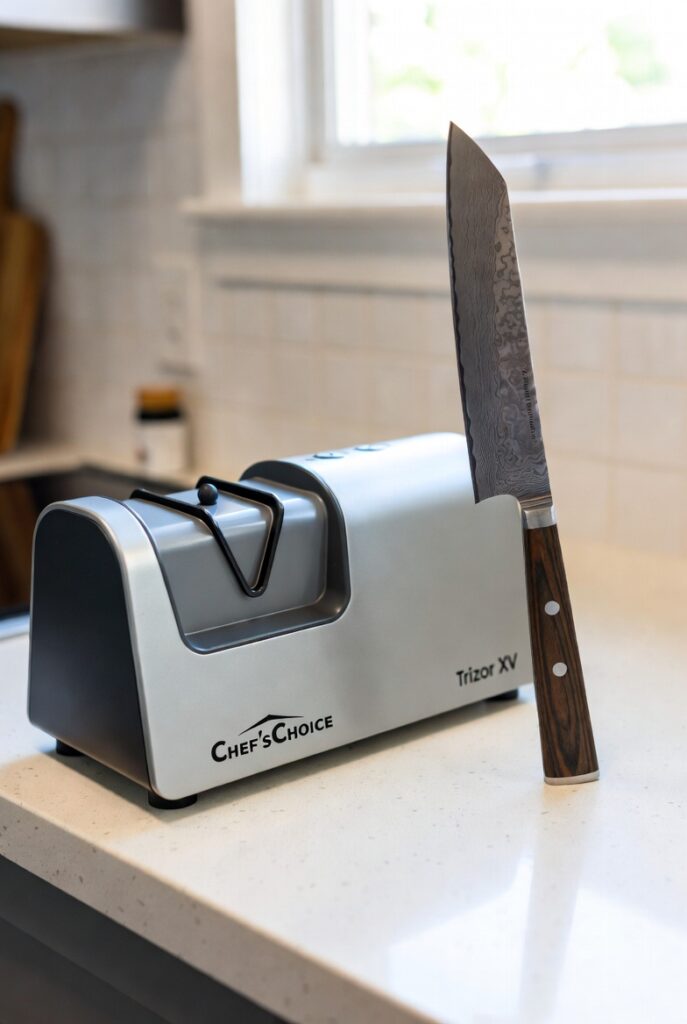
Electric sharpeners used to scare me. I thought they’d destroy Japanese blades. Then I tried this one. Three stages specifically calibrated for 15° Asian edges. Ninety seconds later my dullest santoku was slicing paper. I use it when friends are coming over and I don’t have time for a full whetstone session.
Pros:
- Lightning fast and dead consistent
- Handles both straight and serrated edges
- Built-in angle guides
- Around $140-160
Cons:
- Removes more metal than stones (don’t overuse)
- A bit noisy for early mornings
The first time I used it after a bad experience with a generic electric model, I actually laughed out loud. This is my secret weapon for weeknight dinners. Check the latest price on Amazon
4. Amazon Basics Whetstone – The Budget Hero That Still Surprises Me
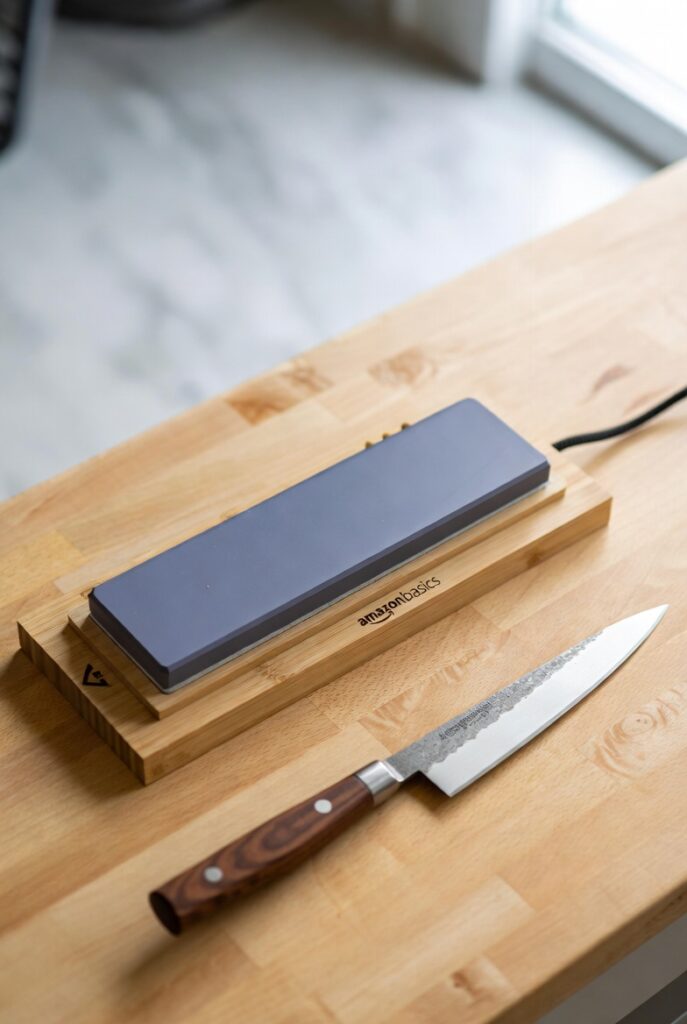
Don’t sleep on this one. For under $20 it comes with everything a total newbie needs. I bought it as a backup and ended up using it more than I expected. The results were shockingly close to my more expensive stones.
Pros:
- Insanely cheap
- Includes angle guide and base
- Decent sharpness for the price
Cons:
- Softer stone dishes quicker
- Grit labels aren’t always spot-on
Still my go-to travel sharpener. Solid entry-level best japanese knife sharpener. Check the latest price on Amazon
5. KERYE Professional Japanese Whetstone Set
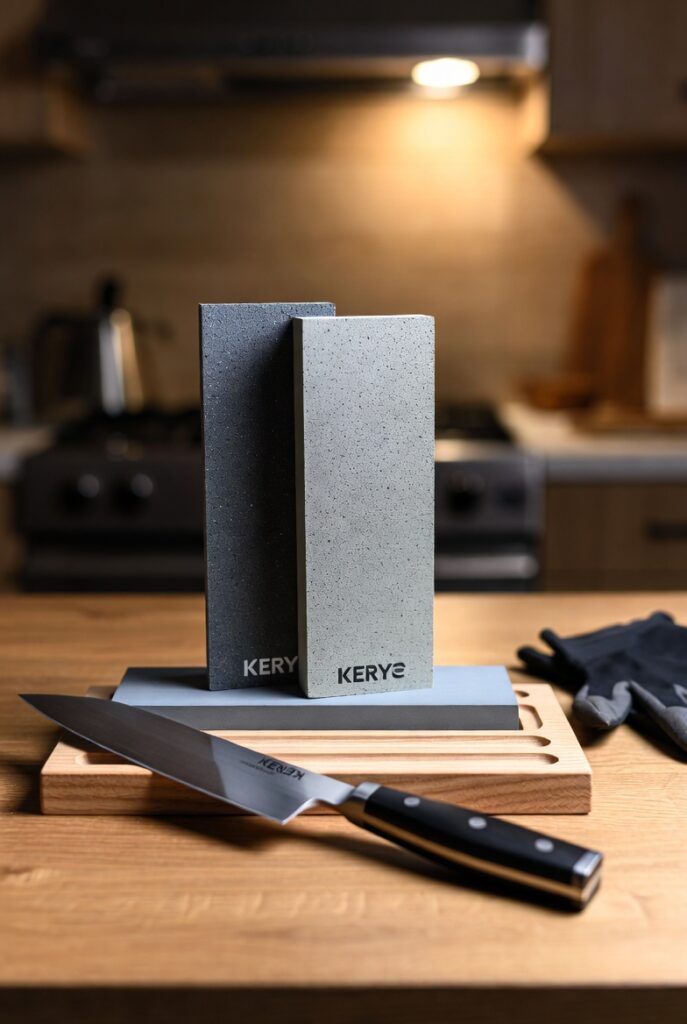
Full kit energy. Four grits, flattening stone, gloves—everything. I used the 400 grit to reprofile a chipped blade after an over-enthusiastic bone-cutting incident. Worked like a charm.
Pros:
- Complete package
- Excellent grit progression
- Non-slip bamboo base
Cons:
- Takes up drawer space
- Soaking required
Great value best japanese knife sharpener kit. Check the latest price on Amazon
6. Shun Combination Whetstone
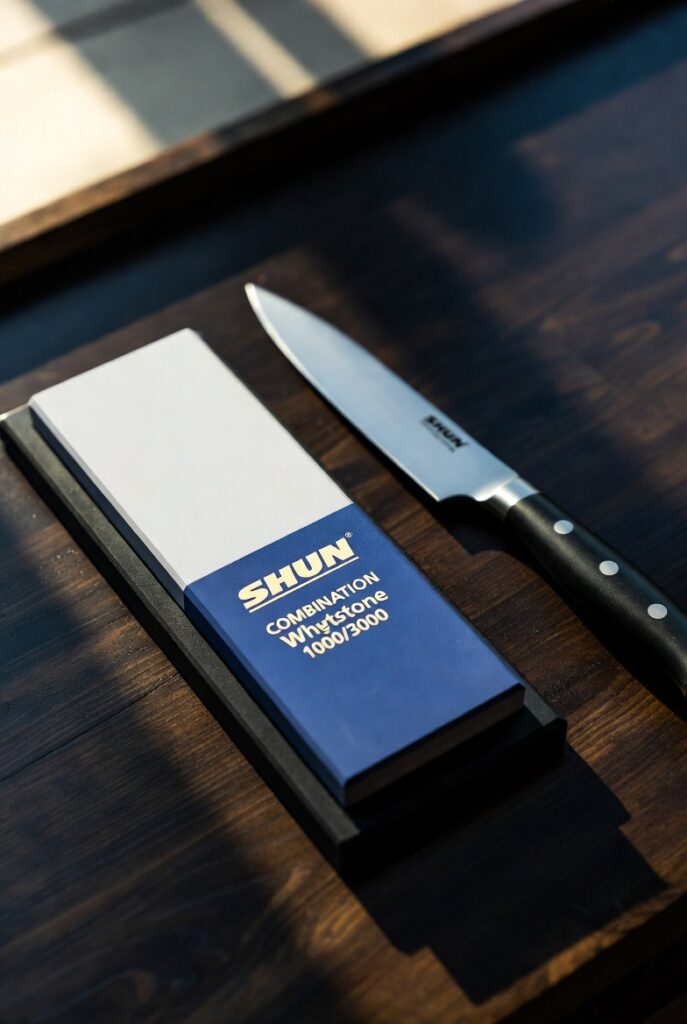
Made by the same folks who make the knives. Feels special every time. Perfect match for Shun steel.
Pros:
- Brand-specific angles
- Beautiful quality
- Around $80
Cons:
- Smaller surface
- No extras
I love using this best japanese knife sharpener one on date nights when I want to feel fancy. Check the latest price on Amazon
7. Sharp Pebble Premium Whetstone
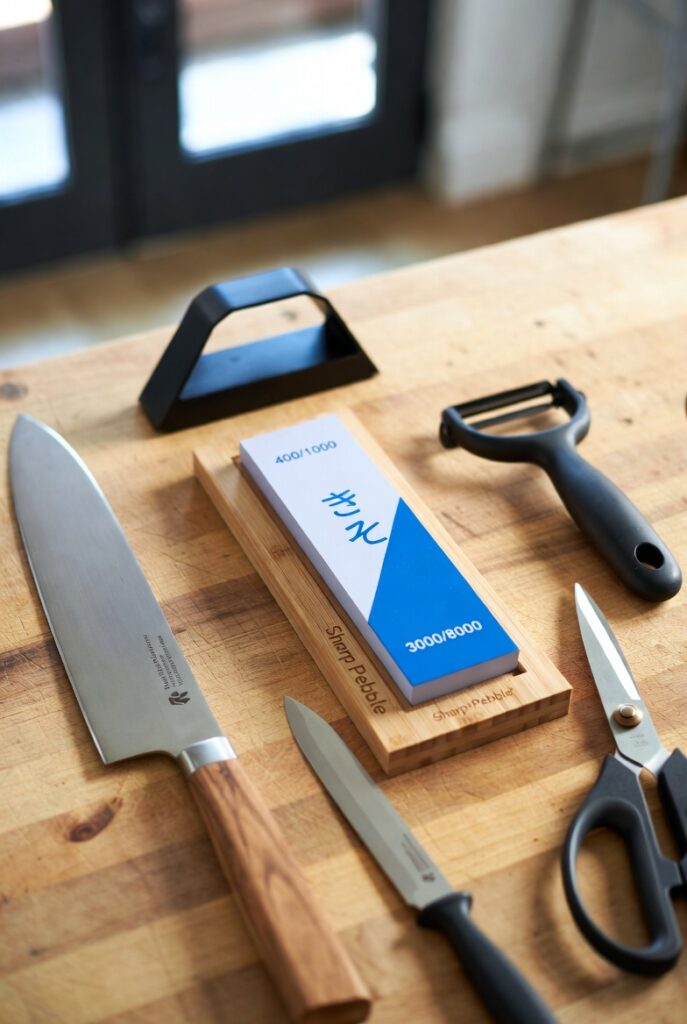
Four grits in one set with flattening stone included. My most-used travel companion.
Pros:
- Huge grit range
- Great price
- Extras included
Cons:
- Feels softer over time
Reliable for the money. Check the latest price on Amazon
8. Naniwa Ceramic Whetstone
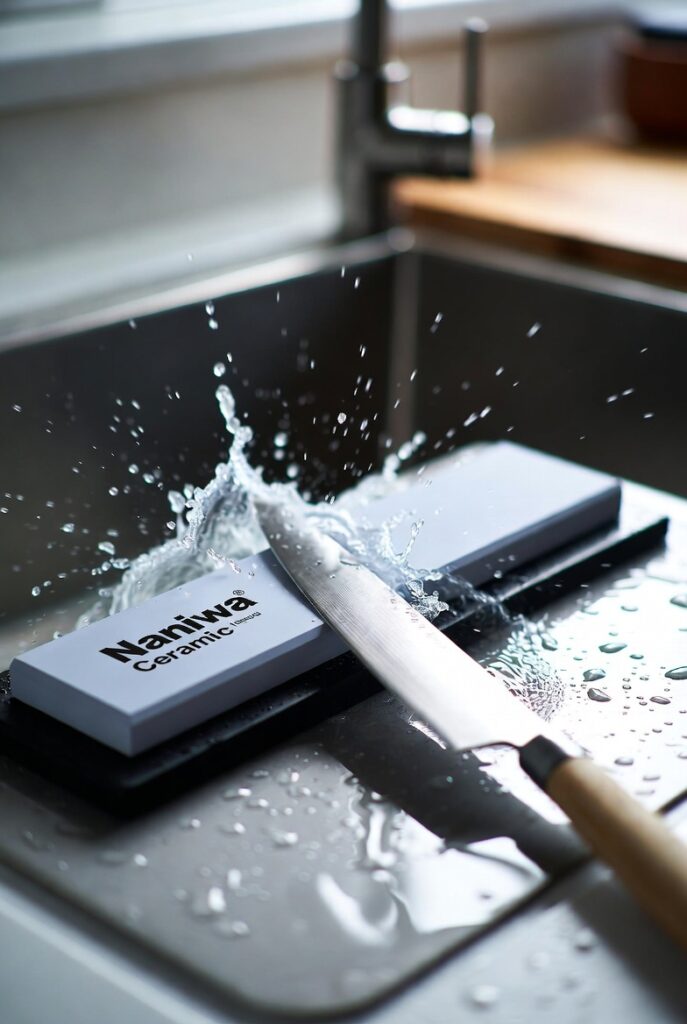
Japanese-made, fast-cutting, and loved by actual pros. The feedback while sharpening is addictive.
Pros:
- Excellent cutting speed
- Durable ceramic
- Around $50
Cons:
- Soaking needed
- Steeper learning curve
Switched to this after my first King and never looked back for finishing work. Check the latest price on Amazon
Comparison Table
| Product | Type | Price Range | Best For | Edge Retention | Ease for Beginners | My Personal Score |
|---|---|---|---|---|---|---|
| King Whetstone | Whetstone | $35-45 | Everyday home cooks | Excellent | Very High | 9.5/10 |
| Chef’sChoice Trizor XV | Electric | $140-160 | Busy families | Very Good | Highest | 9/10 |
| Shapton Glass | Whetstone | $50-60 | Serious enthusiasts | Outstanding | Medium | 9.5/10 |
| Amazon Basics | Whetstone | $15-20 | Absolute beginners | Good | High | 8/10 |
| KERYE Set | Kit | $40-50 | Full setup lovers | Excellent | High | 8.5/10 |
| Shun Combination | Whetstone | $80 | Shun knife owners | Outstanding | Medium | 8.5/10 |
| Sharp Pebble | Kit | $30-40 | Versatile travel use | Very Good | High | 8/10 |
| Naniwa Ceramic | Whetstone | $45-55 | Intermediate+ users | Outstanding | Medium | 9/10 |
How to Sharpen Japanese Knives Like a (Not-So-Pro) Pro
Alright, here’s the part I wish someone had written for me when I started. Step-by-step, no fluff.
- Soak your stone (unless it’s Shapton).
- Set your angle—use the guide first. 15° for most Japanese knives.
- Light pressure, push forward like you’re slicing the stone.
- Flip and repeat until you feel a burr.
- Move to higher grit and polish.
- Finish with a leather strop if you have one.
I once spent an entire evening sharpening six knives while listening to old Bollywood songs. By the end my shoulders hurt but my knives were scary sharp. Worth every minute.
Common Mistakes I Made So You Don’t Have To
- Pressing too hard on high grits (ruined one edge completely).
- Using the wrong angle (my first gyuto looked like a saw).
- Skipping flattening (stones dish and you lose flatness).
- Sharpening too often instead of just honing.
Learn from my pain.
FAQ – Real Questions I’ve Actually Been Asked
What’s truly the best japanese knife sharpener for total beginners?
King Starter Set. The guide saves you months of frustration.
Can regular sharpeners work on Japanese knives?
Sometimes, but you’ll regret it long-term. Stick to 15° models
How often should I actually sharpen?
Every 2-4 months with weekly honing. Depends on use.
Whetstone or electric—which preserves the blade longer?
Stones win for longevity, but electrics are fine if used sparingly.
Do I really need a flattening stone?
Yes. Trust me after my first dished King stone.
What’s the deal with all the different grits?
Low grits repair, high grits polish. Start at 1000 for most.
Can these sharpen single-bevel knives like yanagiba?
Some can, but you need to be careful with the flat side.
Final Thoughts – What I’d Buy Again Tomorrow
After everything— the blood, the frustration, the triumphant “holy cow it cuts paper” moments—my heart still belongs to the King Whetstone Starter Set as the overall best japanese knife sharpener for most people. It’s forgiving, effective, and doesn’t require a second mortgage.
But honestly? The real win isn’t the tool itself. It’s the confidence that comes from knowing you can keep your beautiful Japanese knives performing like they did the day you bought them. Cooking becomes fun again. Prep feels effortless. And that, my friends, is worth every minute I spent learning.
If you’re ready to stop fighting dull blades and start enjoying your kitchen again, grab one of my top picks below. Your tomatoes (and your fingers) will thank you. Drop a comment and tell me which sharpener you ended up with—I love hearing other people’s stories too. Happy sharpening, everyone!
This post contains affiliate links. If you buy through them, I may earn a small commission at no extra cost to you. Thanks for supporting my blog!