- Mini Cooler AC Portable Air Conditioners: Compact Comfort for Every Space
When it comes to household appliances in today’s hectic and more and more tiny living situations, simplicity and portability are very important. The little cooler AC—also known as a portable air conditioner—is one such invention that has become quite well-known. Intended to offer cool relief in tiny areas without the bother of permanent setup, these portable gadgets provide a practical answer to battle the heat in summer. This post examines mini cooler ACs, their characteristics, functioning, and a thorough review of their benefits and drawbacks.
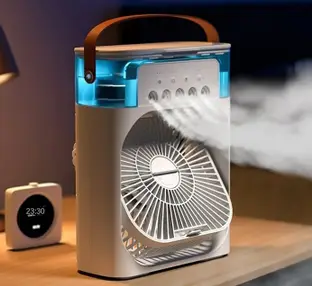
What is a mini cooler AC?
Designed to cool down little spaces like bedrooms, home offices, dorm rooms, or personal workstations, a mini cooler AC is a small, portable air conditioner. Mini coolers, unlike conventional AC systems fixed to windows or walls, can be relocated between rooms as needed. Most designs use either evaporative cooling technology (air coolers) or conventional refrigerant-based cooling systems in a scaled-down form.
For renters, students, or anyone looking for an affordable, energy-saving cooling solution devoid of the difficulty of expert installation, they are perfect.
Key Features
Portability:
Most mini coolers are light and sometimes have built-in handles or wheels to help with quick
Mobility.
Compact Design:
Small size makes it simple to put on a floor, table, or desk in restricted areas.
Easy to Use:
Simple controls and plug-and-play functionality make this device easy to use.
Multi-Functionality:
Some models are helpful year-round as they can also function as heaters, air purifiers, or humidifiers.
Eco-Friendly Options:
Many models are developed using low-energy or water-based technology to lower power usage.
USB or Battery-Powered Models:
Great for travel or outside use are USB- or battery-powered models.
How Do Mini Coolers Work?
Mini air conditioning systems often come in two forms:
1. Evaporative cooling systems: air conditioners
These chill the air by evaporation and water. Warm air is sucked via a pad saturated with water by a fan; evaporative cooling then releases the air back into the room. This technique is most effective in dry conditions and adds some moisture to the air.